
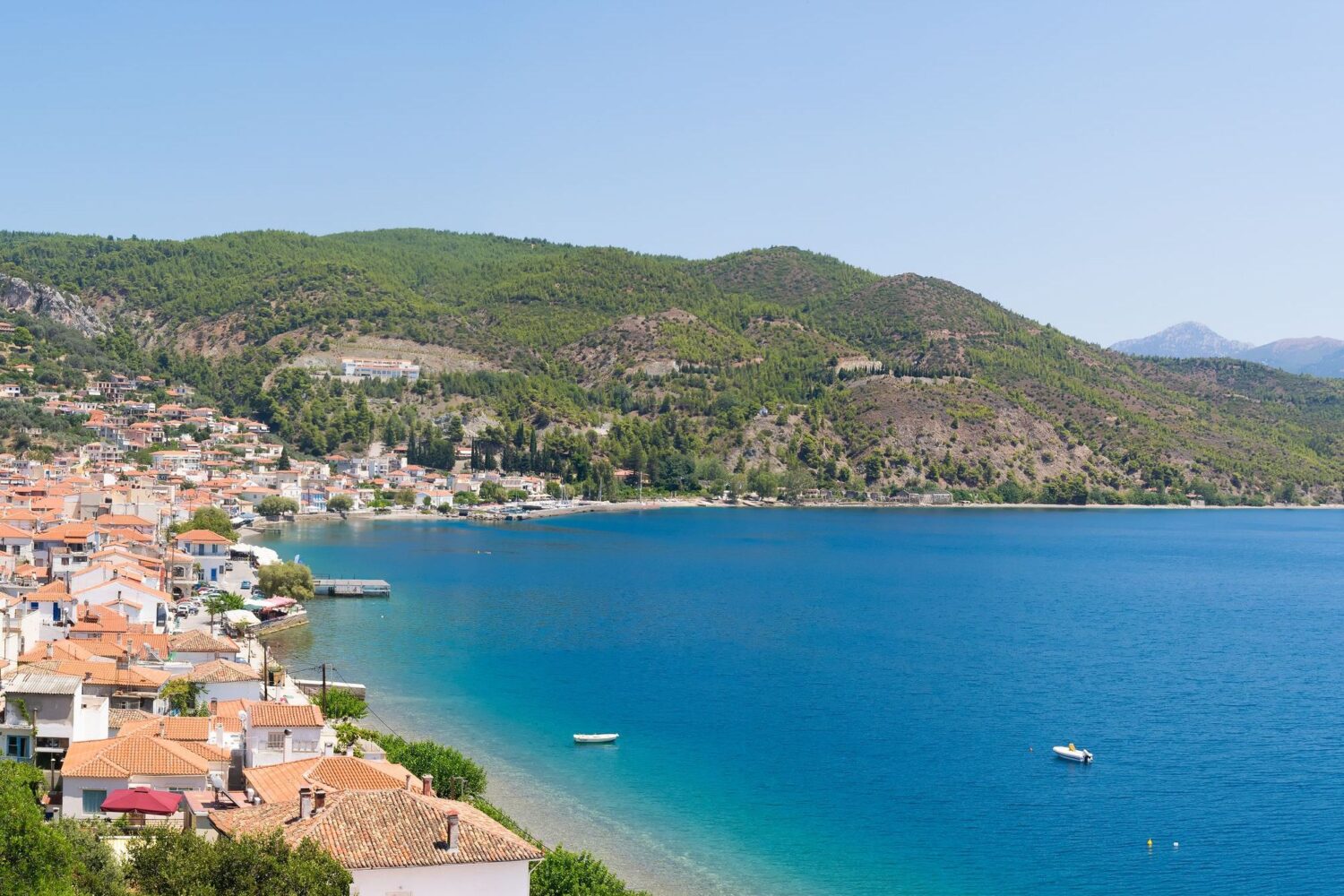
Discover Evia: Greece’s Second Largest Island
Evia, also known as Euboea, is Greece’s second largest island after Crete. Covering 3,684 square kilometers, it is full of contrasts, with mountains, beaches, fertile valleys, and traditional villages. Despite its size and beauty, it remains surprisingly under the radar for many travelers, which makes it feel like one of Greece’s best kept secrets.
The island is just a 90 minute drive from Athens and is connected to the mainland by the New Chalkida Bridge. This makes Evia easy to reach while still offering the charm of island life. Visitors can hike through pine covered mountains in the morning, swim in clear blue waters in the afternoon, and enjoy fresh seafood in a seaside taverna by evening. With its mix of natural beauty, history, and authentic Greek atmosphere, Evia is a destination that has something for everyone.
Natural Beauty and Outdoor Adventures
Evia is full of variety, which makes it perfect for anyone who loves the outdoors. In the north, you’ll find green pine forests, waterfalls, and mountain paths that are great for hiking. The central part of the island has small, welcoming villages and peaceful beaches where you can relax and enjoy a slower pace. Further south, the scenery becomes more dramatic, with rocky coastlines, hidden coves, and sites that tell stories from the island’s long history.
One of the most popular spots in northern Evia is Edipsos, famous for its natural hot springs. People have been visiting here since ancient times to enjoy the healing waters. Central Evia is home to Chalkida, the lively capital, where you can see the unusual tidal currents of the Evripos Strait. The waters here actually change direction several times a day, sometimes as often as every six hours. This rare natural phenomenon has drawn attention since ancient times, and even Aristotle studied it. Today, visitors gather along the waterfront to watch the shifting currents while enjoying the town’s many cafés and restaurants. In the south, you can explore the Dimosari Gorge, a beautiful hiking route that leads down to the sea, or visit Karystos, a town with a charming harbor, old fortresses, and easy access to nearby beaches.
Rich History and Cultural Heritage
Evia has a long and fascinating past that stretches back to prehistoric times. Archaeological finds show that people lived here thousands of years ago, and the island later became home to the Abantes, one of the earliest Greek tribes. Because of its position near the mainland, Evia often played an important role in Greek history. During the Persian Wars, for example, the island’s city of Eretria was destroyed by the Persians before the famous Battle of Marathon. Later, Evia was influenced by the Romans, Byzantines, Venetians, and Ottomans, each leaving their own mark on the island’s architecture, traditions, and culture.
You can still see traces of this layered history today. Ancient ruins and temples, Byzantine churches, Venetian castles, and Ottoman-era bridges are scattered across the island. Traditional festivals, local music, and folk dances are also a big part of Evia’s cultural identity, many of which have been passed down for generations. These celebrations are not just performances for visitors but living traditions that locals take pride in, making the island’s culture feel vibrant and welcoming.
Some of the best places to explore Evia’s past include the Archaeological Museum of Eretria, which houses treasures from the ancient city, and the ruins of the Temple of Apollo Daphnephoros. In Chalkida, you can see the medieval Karababa Castle, while in Kymi and Edipsos, old churches and traditional mansions showcase the island’s Byzantine and neoclassical heritage. These sites give visitors a clear sense of how Evia’s history connects to the wider story of Greece.
Beaches in Evia
Evia’s coastline is full of variety, with beaches that suit every kind of traveler, from sandy family friendly spots to secluded coves framed by cliffs and pine trees. Because the island is so large, the beaches change character from north to south, making it worth exploring different areas.
In the north, Edipsos Beach is famous for its natural hot springs that flow into the sea, creating a one of a kind swimming experience. Nearby, Agios Nikolaos has long stretches of sand and calm waters, ideal for families.
Central Evia offers some of the island’s most popular beaches. Chiliadou Beach, on the Aegean side, is surrounded by dramatic cliffs and lush greenery, with pebbly sand and crystal clear waters that attract both swimmers and campers. Kalamos Beach is another favorite, with golden sand and a laid back vibe perfect for a full day by the sea.
In the south, Figia Beach near Karystos combines clear waters with a small taverna, while Marmari Beach is well known among windsurfers thanks to its steady breezes. Zarakes Beach offers a peaceful stretch of sand with shallow waters and a relaxed atmosphere.
Evia also has many hidden gems for travelers seeking quieter spots. Kymi Beach is a small sandy cove with calm waters, perfect for relaxing and enjoying local seafood at nearby tavernas. Varkiza Beach, tucked away on the eastern coast, provides natural shade from pine trees and a serene environment. Pefki Beach near the village of Pefki has soft sand and a family friendly vibe, while Agia Anna Beach near Chalkida is a charming golden sand beach often overlooked by tourists. Rovies Beach in northern Evia combines rocky coves with small sandy areas and is ideal for snorkeling.
Where to Stay
Evia has a wide variety of accommodations to suit different types of travelers, from families and couples to solo adventurers. In Chalkida, the island’s lively capital, you’ll find boutique hotels, guesthouses, and small apartments within walking distance of the waterfront. Staying here puts you close to restaurants, cafés, shops, and the town’s evening buzz, making it ideal for those who enjoy being in the center of activity.
Along the coast, towns like Eretria, Marmari, and Karystos offer beach resorts, seaside apartments, and family-run hotels where you can wake up to the sound of the waves. Many of these options are right on the beach or just a short walk away, perfect for travelers who want easy access to swimming, sunbathing, and seaside tavernas.
In the north, Edipsos is famous for its thermal springs, so many hotels and resorts here are built around spa facilities, offering wellness treatments alongside comfortable accommodations. Central Evia’s mountain villages provide a different experience, with traditional guesthouses and small inns tucked into olive groves or hillside landscapes. These spots are quieter and give a more authentic sense of island life, ideal for travelers seeking peace, local culture, and scenic views.
For those looking for something special, Evia also has villas and holiday homes available for rent, often with private pools or panoramic sea views. These are great for families, groups of friends, or anyone wanting more privacy and flexibility during their stay.
Where to Eat
Evia’s cuisine is all about fresh local ingredients and traditional recipes. Seafood is the star, thanks to the island’s long coastline, but you’ll also find hearty meat dishes, locally made cheeses, and sweet treats that reflect Evia’s rich agricultural traditions. Meals are usually unhurried and enjoyed with a view, whether at a seaside taverna or in a village square.
Must Try Dishes:
Grilled Fresh Fish and Seafood – Sardines, calamari, and local fish are often served simply grilled with lemon and olive oil. Try these at Taverna To Limani in Marmari or Ouzeri Ta Kavouria in Chalkida.
Astakomakaronada (Lobster Pasta) – Fresh lobster cooked in a tomato based sauce with pasta, a specialty in coastal towns like Stefanos Taverna in Figia.
Evia Meat Pies (Pites) – Savory pies made with local cheese, greens, or minced meat. Taverna O Platanos in Edipsos is known for its traditional pies.
Lamb with Herbs – Slow cooked lamb flavored with oregano, rosemary, and thyme. Available at Taverna To Kastro in Karystos.
Skyros Cheese and Local Cheeses – Semi soft or hard cheeses often served with fresh bread, olives, and tomatoes. Souvlaki and Grill Giorgos in Chalkida is a great spot.
Local Sweets – Baklava, Loukoumi, and Fig Based Desserts are widely available, particularly in Chalkida and Edipsos. Kalitsounia Bakery in Chalkida is a local favorite.
Evia is also known for its wine and tsipouro, often produced by small local wineries. Enjoying a meal with a glass of local wine or a shot of tsipouro is part of the authentic experience.
____________
Evia is a place where you can slow down, explore, and enjoy the best of Greece at your own pace. With its sandy beaches, natural springs, charming villages, delicious local cuisine, and rich history, there is something for everyone. Thanks to the New Chalkida Bridge, the island is easy to reach from the mainland, making it a convenient escape for a day trip or a longer stay.