
Greece’s Heartland of Myth and Mountain
Thessaly sits right in the center of Greece, and spending time here feels like being let in on a well-kept secret. From the towering presence of Mount Olympus, the legendary home of the Greek gods, to the otherworldly Meteora monasteries perched atop sheer rock pillars, every corner of Thessaly blends myth, history, and everyday life. The wide plains stretch out below, dotted with fields, vineyards, and traditional villages where life moves at a gentle, welcoming pace.
Thessaly also includes part of the Northern Sporades Islands, such as Skiathos, Skopelos, and Alonissos. These islands offer lush pine forests, sparkling turquoise waters, and charming seaside villages, giving travelers a perfect mix of mountains, plains, and islands in one region. Here, people have a deep connection to the land and sea, which you’ll notice in their warm hospitality, fresh local food, and the rhythm of daily life that still follows the seasons. Whether you’re hiking in the mountains, exploring monasteries, or relaxing on a tranquil island beach, Thessaly invites you to slow down, explore, and experience the authentic spirit of Greece.
Meteora: A Spiritual Ascent
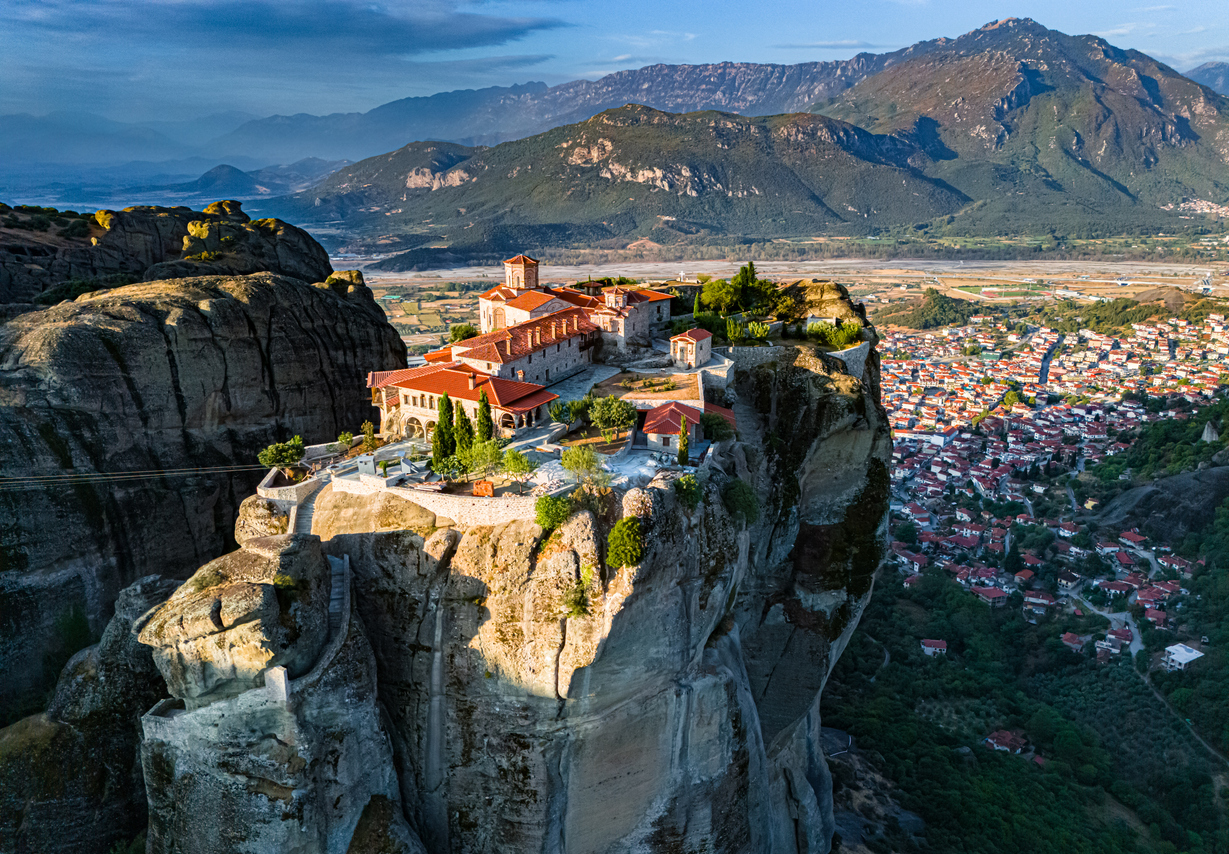
In the northwestern part of Thessaly, you’ll find Meteora—a UNESCO World Heritage site and one of the most unforgettable places in Greece. This area is famous for its Eastern Orthodox monasteries perched atop huge rock pillars, almost as if they’re floating above the landscape. Monks first arrived here in the 1300s, seeking peace and a place to focus on their faith. Of the many monasteries that once stood, six are still active today, and visitors are welcome to explore them. Each has its own story, with breathtaking views and quiet spaces that give a glimpse into how people lived and prayed centuries ago. The nearby town of Kalabaka is where most visitors stay. It’s a relaxed town with plenty of options for food and lodging, and it provides easy access to the trails and roads leading up to the monasteries.
Exploring Meteora
The best way to experience Meteora is on foot or by car, depending on how much time you have. There are well-marked hiking trails that connect the monasteries, offering incredible photo opportunities and chances to enjoy the unique landscape up close. If you prefer a more relaxed approach, you can drive between the monasteries or join a guided tour, which often includes local stories, historical insights, and tips for the best viewpoints. Don’t miss the sunrise or sunset views—seeing the monasteries bathed in golden light is truly magical. Comfortable shoes and a camera are a must, and remember to dress modestly when entering the active monasteries.
Pelion: The Mountain of the Centaurs
On the eastern side of Thessaly, the Pelion Peninsula is where forests, mountain villages, and beautiful beaches come together. In Greek mythology, this was said to be the land of the centaurs—half-man, half-horse creatures—and it still has a touch of that magical feeling today. It’s perfect for travelers seeking a quiet getaway that combines nature, charm, and a slower pace.
Wander through villages like Makrinitsa and Tsagarada, where stone houses, cobbled streets, and flower-filled balconies make you feel like you’ve stepped back in time. These villages also offer stunning views over the Pagasetic Gulf and lush mountainsides. Along the coast, small towns like Agios Ioannis and Milina have beaches ideal for swimming, while calm waters are perfect for sailing, kayaking, or paddleboarding.
Pelion is also a food lover’s delight. Mountain tavernas serve fresh trout from local streams, chestnut-based desserts, and hearty pies filled with local greens. Don’t miss the opportunity to try tsipouro, a strong local spirit, with traditional meze after a day of exploring.
Lake Plastira: A Peaceful Spot in Nature
In the Karditsa area, you’ll find Lake Plastira, a calm and beautiful place surrounded by green forests and gentle hills. Although it’s a man-made lake, it feels completely natural and peaceful. It’s a great spot if you enjoy being outdoors — you can go kayaking on the clear water, explore hiking trails, or even go horseback riding.
Nearby villages keep their traditional way of life and are known for their warm welcomes. When you visit, you’ll often find locals happy to share homemade food and stories about the area. Lake Plastira is the kind of place where you can relax, enjoy nature, and feel right at home.
Larissa and Trikala: Cities Full of History and Life
Larissa, the capital of Thessaly, is a lively city where the old and new come together. You can explore its ancient theater, wander through archaeological sites and museums, and then step right into bustling squares filled with cafés, shops, and nightlife. It’s a city that feels youthful and energetic while still carrying thousands of years of history.
Trikala, by contrast, is a charming riverside city built along the Lithaios River. It’s known for its innovative “smart city” projects and eco-friendly touches, but it also has a cozy, traditional side with stone bridges, local markets, and tavernas. Around the holidays, its “Mill of the Elves” Christmas park makes it especially magical for families.
Both cities are great places to experience Thessalian culture up close, whether you’re joining a local festival, browsing art exhibitions, or sampling regional food and wine. Together, Larissa and Trikala offer the perfect mix of history, modern life, and warm Greek hospitality.
The Sporades Islands: Thessaly’s Seaside Escape
Just off the coast of Thessaly, the Sporades Islands offer a wonderful contrast to the region’s mountains and plains. These lush, green islands are known for their pine-covered hills, clear blue waters, and welcoming island atmosphere, making them the perfect place to unwind after exploring the mainland.
Skiathos is the liveliest of the islands, famous for its golden sandy beaches and buzzing town filled with tavernas, cafés, and nightlife. With boat trips to nearby coves and more than 60 beaches to choose from, it’s a favorite for travelers who want both relaxation and excitement.
Skopelos has a quieter charm, with traditional whitewashed houses, hidden monasteries, and a coastline of turquoise waters framed by pine forests. It’s a place where you can take things slow, wander through cobbled streets, and enjoy breathtaking sunsets. Fans of the film Mamma Mia! will also recognize it as one of the movie’s filming locations.
Alonissos is the wildest and most natural of the islands, home to the National Marine Park, where the rare Mediterranean monk seal is protected. Hiking trails crisscross the island, leading you through forests and along unspoiled beaches, while its old hilltop village offers views that stretch far across the Aegean.
Skyros, though officially part of Central Greece rather than Thessaly, is often grouped with the Sporades. It feels different from the others, with its Cycladic-style white houses, local festivals, and the unique Skyrian ponies that roam the island. With quiet beaches and a traditional hilltop Chora, it’s a peaceful escape with a strong sense of tradition.
A Taste of Thessaly
Thessalian cuisine is a true reflection of the land, generous, hearty, and deeply rooted in tradition. Thanks to the region’s fertile plains, rich pastures, and mountain villages, the food here celebrates fresh, local ingredients in ways that feel both comforting and authentic. Lamb and goat are staples, often slow-cooked until tender and paired with herbs that grow wild in the hills. Cheeses are everywhere, from creamy galotyri (a tangy spreadable cheese unique to Thessaly) to kasseri and feta that appear in pies, salads, and baked dishes. Vegetables and legumes are central, too, often combined with olive oil and fresh herbs in simple but flavorful recipes.
Some dishes you’ll want to seek out include spetzofai, a rustic stew of sausage and peppers simmered in a rich tomato sauce; boubari, a traditional blood sausage flavored with rice and spices; and tsouknidopita, a savory pie filled with foraged nettles that gives a delicious earthy taste of the mountains. In the autumn and winter months, wild mushrooms, chestnuts, and game meats make their way onto the table, adding depth and richness to the seasonal menu.
Eating in Thessaly is more than just enjoying a plate of food, it’s about the experience. Meals are long and social, often stretching late into the night, accompanied by laughter, music, and plenty of tsipouro, the region’s signature spirit, which locals proudly distill and serve in small glasses. Wine lovers will also find much to enjoy here, as the plains of Thessaly produce excellent varieties, including crisp whites and bold reds that pair perfectly with the region’s flavors.
Whether you’re tucked into a mountain taverna with a steaming clay pot of stew, sampling meze by the river in Trikala, or joining a village festival where food is shared freely, Thessaly’s cuisine offers a taste of generosity and tradition in every bite. It’s not just about what’s on the table, but about the people, the stories, and the warm hospitality that make every meal unforgettable.
________
Thessaly has a little bit of everything, from beautiful nature and deep history to traditions that are still alive today. You can explore the monasteries of Meteora, hike legendary mountains, wander through lively cities, or relax in quiet villages, all while getting a real glimpse of Greece’s past and present. Just off the coast, the Sporades Islands add the option of combining mountain adventures with island escapes. Whether you are tasting local food, sharing stories with welcoming locals, or soaking in views that feel like something out of a myth, Thessaly is a place that makes you feel connected, inspired, and always wanting to return.